Introduction: Half the Performance is the Yarn, the Other Half is the Structure
As apparel enthusiasts dive deeper into fabric tech, checking labels for materials like polyester or cotton is just the start. But in my years manufacturing performance textiles, I can tell you that's only half the story. The true performance of a garment is equally dictated by its structure—the architectural design that turns basic yarn into a high-functioning fabric.
Ever wondered why your favorite gym shirt feels airy even when soaked? It's often thanks to intelligent designs like the honeycomb knit. In this article, we'll explore this classic functional structure, analyzing its engineering principles and how it elevates standard tracksuits into high-performance athletic wear. Building on polyester's core strengths (as explored in our main guide on polyester for sportswear), we'll focus on how honeycomb unlocks next-level benefits.
Part 1: The Anatomy of a Performance Knit
1.1 The Honeycomb: Nomenclature and Aesthetics
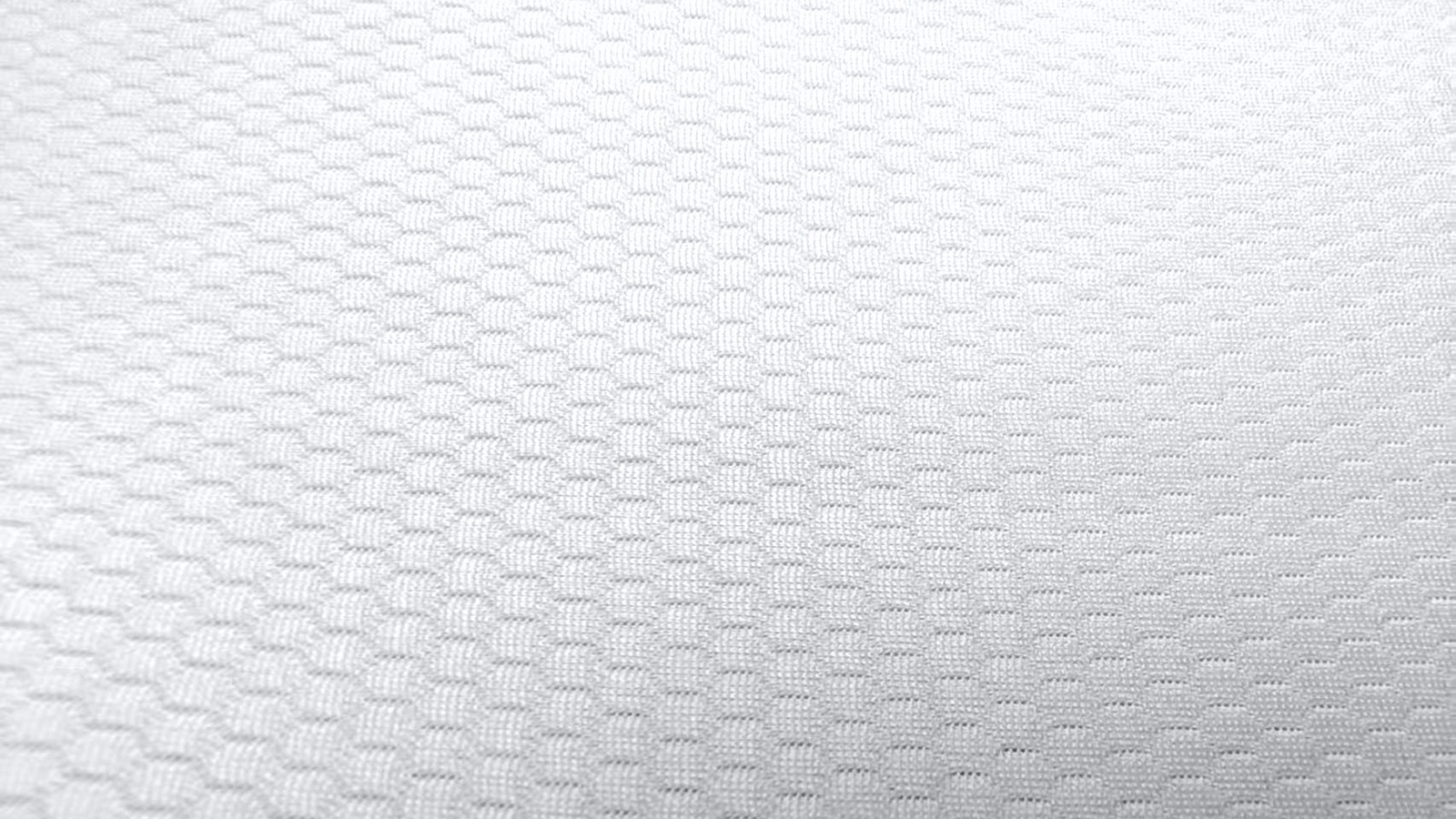
Take a close look at high-quality activewear, and you'll spot fabrics that aren't flat—they have depth. The honeycomb knit stands out with its distinct, three-dimensional texture of repeating hexagonal or diamond-shaped cells, directly inspired by the natural geometry of a beehive.
It shares visual similarities with waffle or pique knits, but its hexagonal geometry is engineered specifically for athletic airflow, unlike the more casual focus of those alternatives. Aesthetically, it signals technical sophistication, making it a favorite in performance apparel.
1.2 The Engineering Behind the Texture
Honeycomb is fundamentally a knit structure, not woven—essential for sportswear because knits offer inherent mechanical stretch, allowing the garment to flex with your body's movements. This is achieved through advanced knitting processes, like jacquard mechanisms or knit-and-tuck loop formations, creating a consistent topography of raised and recessed zones.
This isn't a superficial print; it's built into the fabric's core, forming a foundational engineering element that enhances real-world function.
1.3 Core Working Principle: How 3D Structure Translates to Performance
The brilliance of honeycomb lies in its physical architecture, which leverages principles of thermodynamics and fluid dynamics for tangible athletic advantages. Here's a breakdown:
- Creation of Air Channels for Convective Cooling: Think of it like tiny vents in a building—the recessed areas form micro-channels between the fabric and your skin, creating air pockets that naturally draw away body heat through convection, much like a fan circulating air. This boosts thermal regulation during workouts.
- Reduced Surface Contact for Anti-Cling Comfort: Unlike flat jersey knits that stick to sweaty skin via surface tension, honeycomb's raised points minimize contact. This prevents that clammy, uncomfortable cling during intense activity.
- Increased Surface Area for Evaporative Cooling: The 3D texture dramatically expands the fabric's effective surface area, which accelerates evaporation. This principle is validated by textile science, as studies in publications like the Textile Research Journal consistently show that increasing a fabric's surface topography significantly enhances its evaporative rate—a key factor measured by industry standards like AATCC Test Method 201 (Drying Rate of Fabrics).
Part 2: The Synergistic Relationship: Why Polyester Maximizes the Honeycomb Advantage
An advanced structure shines brightest with the right material. Polyester is the perfect match for honeycomb knits, amplifying its potential in ways other fibers can't.
2.1 Leveraging Polyester's Hydrophobic Nature
Polyester fibers are hydrophobic, repelling water at a molecular level to facilitate movement via capillary action. With a standard moisture regain of just 0.4% (a core metric in textile science), polyester is inherently non-absorbent, making it the perfect vehicle for this process. Honeycomb's air channels and expanded surface provide the ideal framework: polyester channels moisture into these pathways, where enhanced airflow kicks off rapid evaporation.
This synergy creates a superior moisture management system—far more effective than the material or structure alone, ideal for keeping athletes dry and focused.
2.2 Structural Stability and Durability
The excellent dimensional stability of polyester knits is well-documented in the textile industry. Due to its high molecular stability and low moisture absorption, polyester fabric exhibits minimal shrinkage or distortion, even after repeated laundering cycles as specified by ISO 6330 standards. This ensures the 3D integrity of the honeycomb structure is preserved, maintaining long-term performance under athletic stress.
2.3 Achieving Structure Without Mass
Thanks to polyester's high strength-to-weight ratio, honeycomb fabrics gain texture and volume without added bulk. Athletes get high-performance benefits—like enhanced airflow—while keeping garments lightweight for unrestricted movement.
Part 3: Performance Gains and Inherent Trade-offs
Here's a professional breakdown of honeycomb polyester's profile, including advantages, trade-offs, and real-world examples for clarity.
| Performance Metric | Analysis of Advantage | Inherent Structural Trade-off | Real-World Example |
|---|---|---|---|
| Breathability | Superior Air Permeability: The 3D structure creates physical air channels for exceptional convective heat and moisture vapor transfer. | May trap lint or debris in channels over time, requiring more frequent cleaning. | Ideal for running shirts in hot weather—keeps you cooler during marathons. |
| Moisture Management | Accelerated Evaporation Rate: Increased surface area significantly enhances the drying speed of wicked moisture, a conclusion supported by numerous studies on fabric moisture management. | Slightly slower initial wicking in very humid conditions compared to ultra-open meshes. | Perfect for HIIT sessions; sweat evaporates quickly to prevent sogginess. |
| Comfort | Anti-Cling Tactility: Minimal contact points prevent adhesion to damp skin, reducing discomfort. | Technical Feel vs. Soft Drape: Its texture prioritizes functional comfort over the smooth softness of casual fabrics like modal. | Great for yoga pants—moves with you without sticking. |
| Durability | High Structural Resilience: Maintains 3D shape over time, especially in polyester. | Increased Snagging Potential: Raised topography can catch on rough surfaces, though mitigated in high-quality blends. | Suited for team uniforms; withstands repeated use and washes. |
| Aesthetics | Technical Appearance: Visible geometry signals engineered performance. | N/A | Elevates tracksuits to look pro-level, like premium athletic brands. |
Part 4: How to Choose and Care for Honeycomb Polyester
To get the most from honeycomb polyester, select based on quality: Look for tight knits with even hexagonal patterns and recycled polyester (rPET) for sustainability.
Care is straightforward:
- Wash cold, inside out to protect textures.
- Tumble dry low or air dry—it dries fast anyway.
- Avoid high-heat ironing; use a steamer instead.
For seasonal tips: Opt for lightweight honeycomb in summer meshes for max wicking; layer fleece-infused versions in winter for insulation.
Conclusion: Intelligent Structure is the Soul of a Performance Fabric
The power of high-performance apparel comes from the synergy between yarn and architecture. Polyester in a honeycomb knit exemplifies this, delivering capabilities that exceed basic fabrics.
When shopping our performance line, feel the honeycomb texture firsthand—it's where engineering meets everyday athletic excellence. In our onliestore, explore honeycomb polyester tracksuits designed for peak performance. The next time you evaluate activewear, assess the structure beyond the label; that's where true innovation lives.