Introduction: Why Is "Polyester Milk Silk" Such a Confusing Name?
From loungewear to bedding, "Milk Silk" pops up everywhere for its luxurious softness—but its name often misleads, sounding natural, premium, and perhaps even organic. Despite the name, it's not from milk or silk, as we'll clarify. As a manufacturer, I've seen this confusion firsthand, so let's demystify it.
Ever wondered why it feels like silk but washes like a dream? This guide separates marketing from material science, answering: What is it really? How does it perform? Building on our series—like honeycomb and bird's eye mesh guides, plus our main polyester overview—Milk Silk emphasizes tactile luxury over structured ventilation.
Part 1: Decoding the Identity of "Polyester Milk Silk"
1.1 What Is It, Exactly?
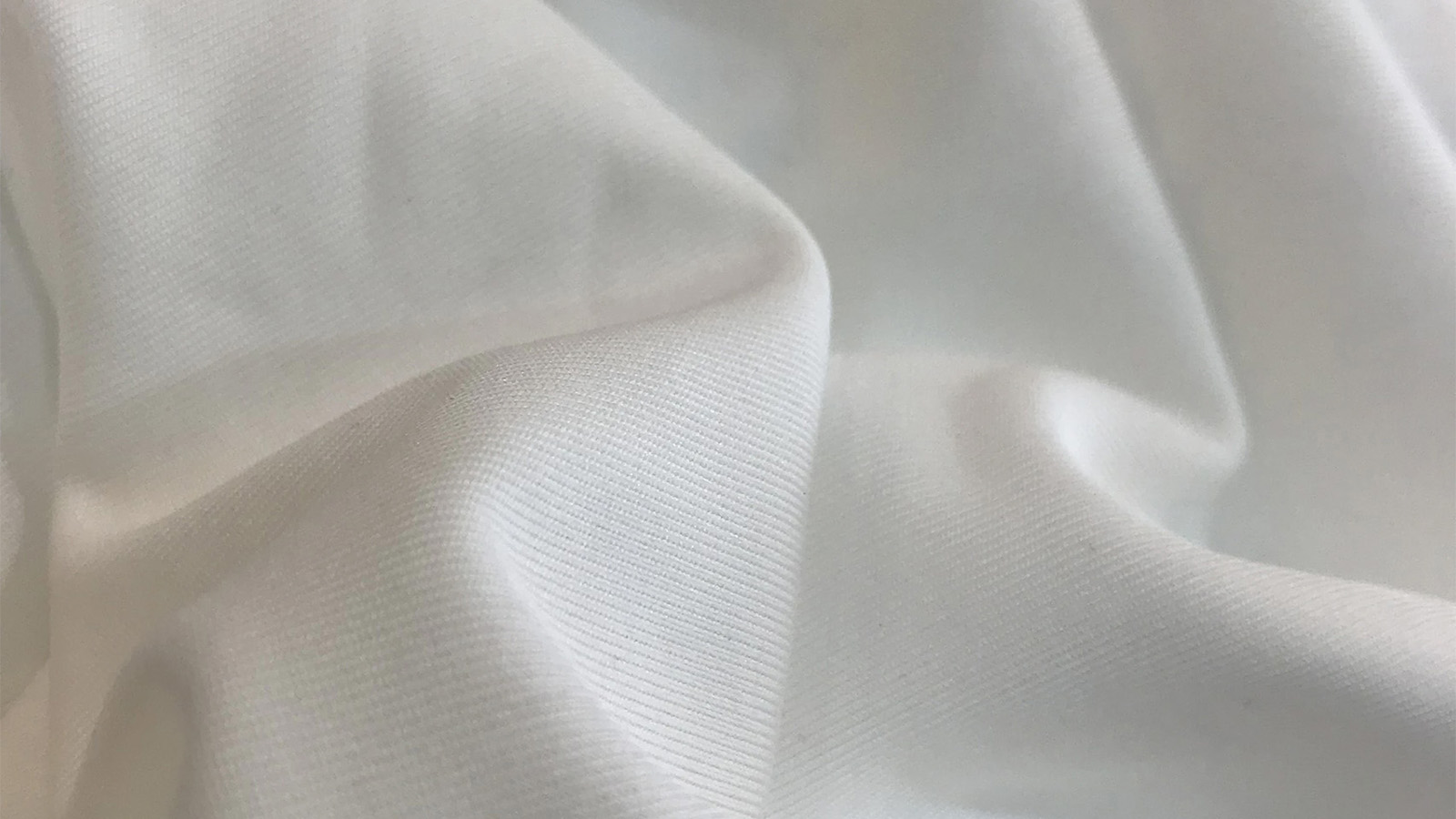
Straight to the point: Polyester Milk Silk is specially processed polyester fabric, treated with brushing or sanding to achieve an exceptionally smooth, fluid, and buttery-soft texture. Think of it as polyester's luxurious upgrade—like velvet but lighter and more fluid, using micro-denier yarns in a dense jersey knit for non-transparent, lightweight elegance.
It's named for its silky feel, not composition, making it a high-tech alternative for everyday luxury.
1.2 Its Relationship with Real Silk
To clarify: Polyester Milk Silk has no relation to real silk—they're from different worlds. It's a synthetic tribute to silk's drape, but with engineered perks.
- Polyester Milk Silk: Man-made from petroleum, focused on durability and care ease.
- Real Silk: Natural protein fiber from silkworms, prized for breathability but delicate.
A factory burn test proves it: Real silk burns slowly with a hair-like smell; polyester melts and smells plastic.
1.3 Its Relationship with Milk
The name sparks intrigue, but there are two distinct "milk" fabrics:
- True Milk Fiber: Casein-based from milk proteins, an eco-innovative regenerated fiber like rayon—niche, sustainable, but less common in retail.
- Polyester Milk Silk: The dominant version, pure polyester with no milk ties, popular for affordability and performance.
When tags say "Milk Silk," it's typically the polyester type—always check for "100% polyester" to confirm.
Part 2: Sensory and Physical Properties
2.1 Synergy with Processing: Amplifying Polyester's Traits
Milk Silk's brushing process enhances polyester's base, creating a cool, non-clingy surface that glides like silk. The fine knit adds superior drape, while inheriting polyester's shrink resistance for lasting shape in loungewear.
2.2 Tactile Feel and Comfort
Its standout is the hand-feel: extreme softness, smoothness, and a fluid drape that contours without awkward cling. Imagine a cool, silky touch against skin—ideal for tactile comfort, though it wicks moisture rather than absorbs, suiting low-sweat scenarios over intense workouts.
2.3 Core Physical Properties
As a knit, it offers excellent stretch and recovery, often with Spandex for four-way flexibility. Colors stay vibrant and fade-resistant, giving a premium look at an accessible price—perfect for mid-to-high-end brands in travel or casual wear.
Part 3: Performance Gains and Inherent Trade-offs
Here's a professional breakdown of Milk Silk polyester, including advantages, trade-offs, and examples.
| Performance Metric | Analysis of Advantage | Inherent Structural Trade-off | Real-World Example |
|---|---|---|---|
| Softness & Drape | Unbeatable Silky Feel: Brushed texture provides luxurious, next-to-skin sensation with fluid movement. | Limited Breathability: Dense knit can feel stuffy in hot, humid conditions without open structures. | Ideal for pajamas—glides comfortably for restful sleep. |
| Durability | Easy Care & Shape Retention: Resists wrinkles, shrinking, and abrasion; retains softness after 100 washes. | Potential for Pilling: Lower-quality versions may pill with friction over time. | Great for travel clothing—packs wrinkle-free and bounces back. |
| Comfort | Stretch & Non-Cling: Moves with you, offering tactile luxury without sagging. | Prone to Static: Builds in dry environments, though anti-static sprays help. | Perfect for yoga pants—soft and flexible for low-impact flows. |
| Aesthetics | Vibrant Colors & Premium Look: Holds dye well for rich, lasting hues. | Environmental Concerns: Opt for recycled polyester (rPET) to address petroleum base. | Elevates bedding sheets to feel high-end without the cost. |
Part 4: How to Choose and Care for Milk Silk Polyester
Choose quality: Seek even brushing, micro-denier yarns, and rPET for sustainability—avoid thin versions that feel cheap.
Recommended applications:
- Pajamas and loungewear for ultimate softness.
- Yoga/low-impact activewear for drape.
- Base layers/T-shirts for everyday luxury.
- Travel gear for wrinkle resistance.
- Premium bedding for silky sheets.
Care guide:
- Machine wash cold with like colors; skip bleach/softeners.
- Tumble dry low or hang—it dries fast.
- Iron on low/steam only; high heat risks melting.
Note: Better than cotton for bedding?Yes, for wrinkle-free luxury, but cotton wins for breathability in hot climates.
Conclusion: Is Polyester Milk Silk Your Ideal Choice?
Polyester Milk Silk is a feel-driven triumph—delivering silk-like luxury with polyester's practicality, complementing our honeycomb and bird's eye mesh guides for tactile focus.