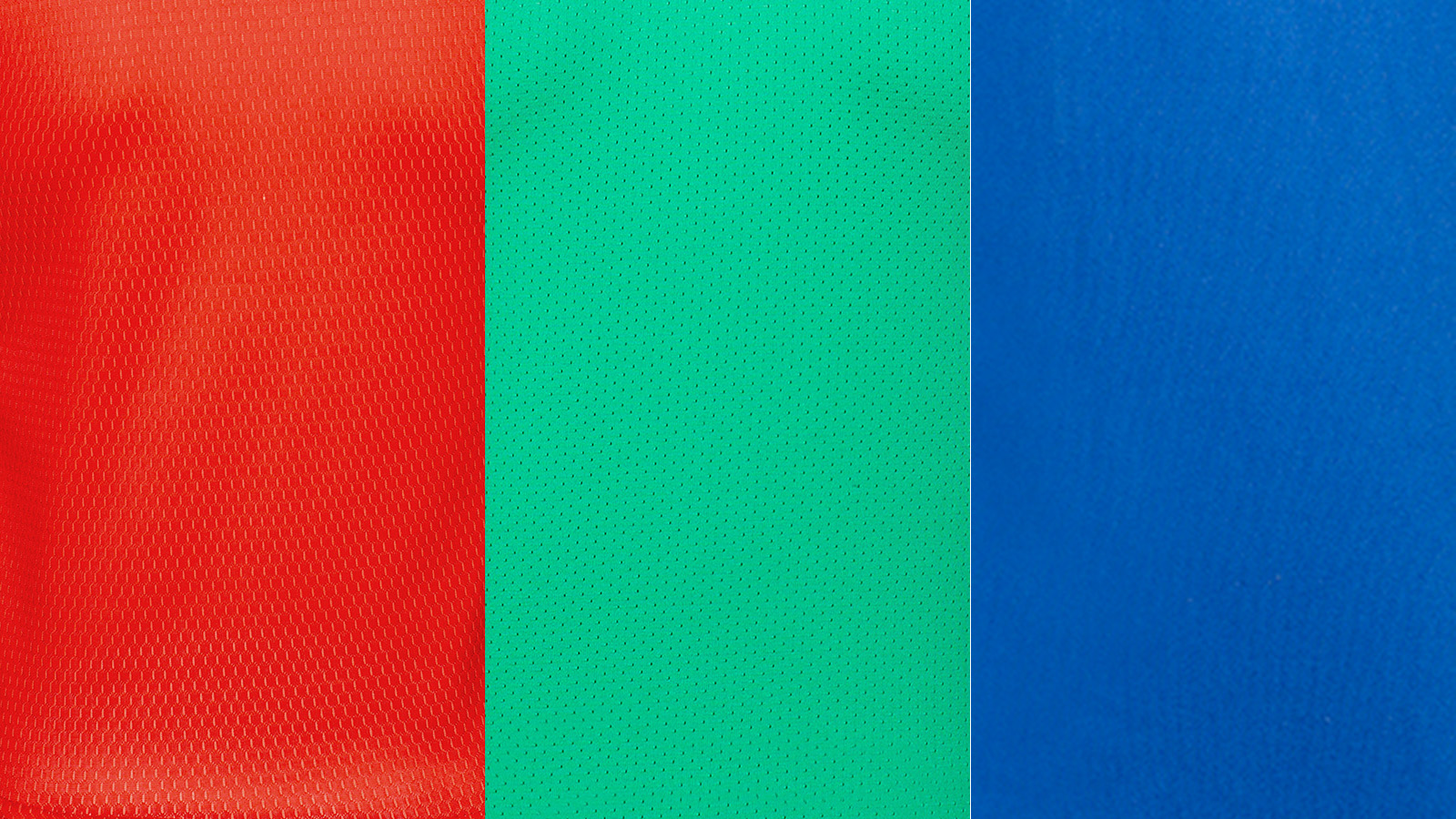
Introduction: A Battle of Fabric Geometry and Texture
When selecting high-performance activewear for yourself or your kids, functional yarns like polyester are a great starting point. But the real magic lies in the fabric's structure and processing, which dictate breathability, comfort, and durability. Bird's Eye Mesh, Honeycomb, and Milk Silk represent three distinct approaches in polyester textiles: one focused on perforation for ventilation, another on 3D topography for advanced moisture control, and the third on luxurious processing for supreme softness.
In this comprehensive comparison, we'll dissect these "smart fabrics" from their engineering principles to practical applications. This guide isn't just about picking a material—it's about matching the right solution to your athletic needs, whether for intense workouts, casual play, or everyday comfort. Drawing from industry insights and performance data, we'll explore how each shines in sportswear scenarios.
Part 1: Fabric Texture, Manufacturing Differences, Core Distinctions, and Design Philosophies
To appreciate these polyester variants, we must delve into their foundational differences. Each is engineered with unique textures, production methods, core attributes, and design intents, tailored for specific performance outcomes.
1.1 Texture and Sensory Experience
- Bird's Eye Mesh: Features a smooth, lightweight feel with subtle micro-holes that give it a refined, jersey-like softness. It's comfortable against the skin, akin to a high-quality T-shirt, without noticeable roughness—ideal for those who prefer a low-profile, non-textured touch.
- Honeycomb: Offers a distinct 3D textured surface with raised hexagonal or diamond-shaped cells, creating a slightly bumpy but airy feel. This topography provides a "technical" hand-feel, which some describe as wooly or structured, enhancing grip and reducing direct skin contact for anti-cling comfort.
- Milk Silk: Boasts an exceptionally buttery-smooth, fluid texture that mimics real silk's sheen and drape. Processed through brushing or sanding of micro-denier yarns, it glides coolly over the skin, delivering luxurious tactile softness but with less ventilation due to its dense knit.
1.2 Manufacturing Differences
- Bird's Eye Mesh: Produced via weft knitting with precise loop formations to create stable, tiny perforations. Often 100% polyester or blended with spandex for stretch, the process involves advanced jacquard techniques for uniform micro-holes, ensuring opacity and durability without additional finishing.
- Honeycomb: Crafted through specialized knit-and-tuck methods on circular machines, forming a 3D topography. Polyester yarns are twisted or brushed for resilience, and the fabric may undergo heat-setting to lock in the hexagonal structure, making it more complex and potentially costlier to produce than flat knits.
- Milk Silk: Involves extruding fine-denier polyester filaments, followed by brushing, sanding, or chemical softening to achieve the silky finish. It's typically a jersey knit with optional spandex, and manufacturing emphasizes post-processing for smoothness, distinguishing it from the structural focus of the others.
1.3 Core Distinctions and Engineering Principles
- Bird's Eye Mesh: A 2D perforated design where micro-holes act as direct vents for air and moisture exchange. Its core is simplicity in breathability—holes facilitate capillary action in polyester, wicking sweat efficiently without added bulk.
- Honeycomb: A 3D topographical structure with peaks and valleys creating air channels and reduced contact points. This leverages fluid dynamics for enhanced evaporation and heat dissipation, making it a "micro-environment manager" rather than a simple ventilator.
- Milk Silk: A processed, dense knit prioritizing sensory luxury over airflow. Its core is in molecular-level softening of polyester fibers, focusing on drape and hypoallergenic comfort, but it sacrifices openness for a sealed, silky barrier that wicks moderately.
1.4 Design Philosophies
- Bird's Eye Mesh: Emphasizes balanced, everyday performance through "open-window" ventilation—designed for versatility in moderate activities where consistent airflow and quick-drying are key without overwhelming texture.
- Honeycomb: Rooted in aerodynamic engineering, it aims to optimize the skin-fabric interface for high-sweat scenarios, prioritizing anti-cling and rapid moisture transport as a "specialist" for intense athletics.
- Milk Silk: Driven by biomimicry of natural silk, its philosophy is tactile indulgence and ease—engineered for low-impact or close-to-skin uses where softness trumps ventilation, blending luxury with polyester's practicality.
Part 2: Applications and Multi-Faceted Property Comparisons
These fabrics excel in various applications, from team sports to casual fitness. Below, we compare their properties across key metrics, drawing on performance attributes like breathability, durability, and comfort. Each is suited to polyester's hydrophobic nature but adapted differently.
2.1 Primary Applications
- Bird's Eye Mesh: Widely used in team jerseys (soccer, basketball), performance T-shirts, polo shirts, and running vests. Its fine texture makes it ideal for uniforms and linings in jackets/shorts, where balanced ventilation is needed without bulk.
- Honeycomb: Common in high-intensity sportswear like football jerseys, gym tops, and outdoor gear. It shines in structured garments such as tracksuits or base layers, leveraging its texture for enhanced airflow in sweaty environments.
- Milk Silk: Best for loungewear, yoga pants, base layers, and bedding. In apparel, it's favored for low-impact activewear or travel clothing, where drape and softness are prioritized over heavy athletic demands.
2.2 Multi-Faceted Property Comparisons
Here's a head-to-head analysis across critical indicators, based on industry benchmarks (e.g., honeycomb's evaporation rate can be 20-30% faster due to surface area).
| Performance Metric | Bird's Eye Mesh | Honeycomb | Milk Silk | Professional Takeaway |
|---|---|---|---|---|
| Breathability | Excellent: Micro-holes enable direct air exchange, offers superior breathability compared to flat knits. | Superior: 3D channels create convective cooling, ideal for heat dissipation. | Fair: Dense knit limits airflow, better for mild activities but can feel stuffy. | Bird's Eye and Honeycomb lead for activewear; Milk Silk suits low-sweat scenarios. |
| Moisture Management | Great: Rapid wicking and quick-dry via perforations. | Exceptional: Increased surface area accelerates evaporation, noticeably faster. | Moderate: Wicks but doesn't absorb; prone to clamminess in humidity. | Honeycomb edges out for high-sweat; Milk Silk lags in intense use. |
| Comfort (Dry/Wet) | Dry: Smooth, T-shirt-like. Wet: Minimal cling but possible stickiness. | Dry: Textured but airy. Wet: Anti-cling champion due to reduced contact. | Dry: Luxuriously soft. Wet: Non-clingy drape but less ventilated. | Milk Silk wins tactile luxury; Honeycomb for wet comfort; Bird's Eye for balance. |
| Durability & Elasticity | Very durable: Snag-resistant, Excellent shape retention, wash after wash. Good stretch with spandex. | Durable: High resilience but raised texture risks snagging. Excellent recovery. | Good: Wrinkle-resistant, stretches well but may pill in low-quality versions. | All robust, but Bird's Eye best for abrasion-heavy activities. |
| Aesthetics & Weight | Subtle, refined look; lightweight (130-180gsm). | Technical, 3D vibe; slightly heavier for structure. | Silky sheen, elegant; ultra-light and fluid. | Bird's Eye versatile; Honeycomb "pro"; Milk Silk premium casual. |
2.3 Additional Properties: Sustainability and Cost
- Sustainability: All can use recycled polyester (rPET); Honeycomb and Bird's Eye often incorporate eco-dyes for UV protection, while Milk Silk emphasizes hypoallergenic finishes.
- Cost: Bird's Eye is most affordable due to simpler production; Honeycomb mid-range; Milk Silk higher for specialized processing.
Part 3: Suitability for Styles, Popularity in Children's Sportswear, and Applications in Athletics
In sportswear, fabric choice impacts fit, safety, and appeal—especially for kids, where breathability, softness, and durability prevent irritation during play.
3.1 Suitable Styles
- Bird's Eye Mesh: Fits loose or fitted jerseys, shorts, and tanks. Its opacity and smoothness suit team uniforms or layered outfits, allowing prints without distortion.
- Honeycomb: Ideal for structured tracksuits, hoodies, and compression tops. The texture adds grip for non-slip fits, perfect for form-fitting styles in cycling or running gear.
- Milk Silk: Best for relaxed yoga sets, base layers, or loungewear hybrids. Its drape suits flowy pants or soft tees, but avoid tight athletic cuts due to limited ventilation.
3.2 Popularity in Children's Sportswear
For kids, breathable and durable fabrics like polyester blends are preferred to handle rough play and frequent washes. Bird's Eye Mesh is most popular for its balanced comfort and ventilation, reducing overheating during school sports or playground activities—often chosen for hypoallergenic, quick-dry properties that minimize rashes.
Honeycomb follows closely, favored for high-sweat kids' activities like soccer, where anti-cling prevents discomfort. Its texture can appeal to older children for a "cool" look, but may feel too bumpy for sensitive toddlers.
Milk Silk is less common in pure sportswear but gains traction for hybrid kids' active-loungewear, like soft gym shorts or pajamas. Its luxurious feel is popular for sensitive skin, though limited breathability makes it better for mild play rather than intense sports.
3.3 Applications in the Sportswear Domain
- Bird's Eye Mesh: Dominant in team sports (basketball jerseys) and general fitness, where versatility shines—e.g., in kids' running vests for marathons or gym class.
- Honeycomb: Excels in endurance sports (trail running, football) for moisture control, used in youth training gear to keep active children dry and focused.
- Milk Silk: Applied in low-impact areas like yoga or dance wear, or as inner linings in kids' apparel for comfort during casual movement, blending with spandex for flexibility.
Part 4: Ease of Cleaning and Care Differences
Polyester's low-maintenance nature applies to all, but structures influence care routines to preserve performance.
4.1 Ease of Cleaning
- Bird's Eye Mesh: Easiest overall—machine wash cold in a mesh bag to protect holes, with minimal shrinkage. Quick-dries in air or low-heat tumble, resisting odors with frequent washes.
- Honeycomb: Moderately easy; cold wash inside-out to safeguard 3D texture, avoiding high spin to prevent flattening. Air drying preferred, as heat can degrade channels, but it's mildew-resistant.
- Milk Silk: Requires more caution—hand wash or delicate cycle in cold water to maintain softness, as agitation can cause pilling. Dries fastest but avoids dryers to prevent melting or loss of sheen.
4.2 Care Distinctions and Tips
- Stain Removal: All respond well to mild detergents; Bird's Eye and Honeycomb handle spot-cleaning easily due to openness, while Milk Silk needs gentle pre-treatment to avoid damaging the brushed surface.
- Ironing and Storage: Low-heat iron for all; Milk Silk steams best for drape restoration. Store flat or hung—Honeycomb may crease less, but Bird's Eye folds compactly without issues.
- Longevity Factors: Frequent washing (every 2-3 uses) mitigates polyester's odor retention; use anti-static sprays for Milk Silk in dry climates. For kids' wear, it is built to endure frequent washing, but Honeycomb's texture may snag more in play.
Part 5: The Final Verdict — How to Choose for Yourself (or Your Kids)
The choice hinges on priorities: Bird's Eye for balanced versatility, Honeycomb for sweat-intensive performance, and Milk Silk for soft, low-key comfort.
- Choose Bird's Eye if seeking an all-around performer for diverse activities or kids' everyday sports—reliable and subtle.
- Opt for Honeycomb in hot, high-effort scenarios or for cling-sensitive children—its specialist edge shines in endurance.
- Select Milk Silk for tactile luxury in mild athletics or sensitive-skin kids—perfect for blending comfort with casual movement.
Conclusion: A Toolkit, Not a Competition
As a manufacturer, none is "best"—they're tools for tailored solutions. Bird's Eye offers reliability, Honeycomb innovation, and Milk Silk indulgence. By evaluating structure, feel the difference; it's the key to optimal gear for your family's active lifestyle. Explore our line to find the perfect match.
References
-
Özdil, N., Süpüren, G., & Tiryaki, S. (2009). The Effect of Knit Structure on the Moisture Management Properties of Polyester and Pes/Cotton Blend Fabrics. Journal of the Textile Institute, 100(7), 592-598.
-
Stanković, S. B., Popović, D., & Poparić, G. B. (2008). Thermal and Water Vapour Resistance of Knitted Fabrics for Sportswear. Textile Research Journal, 78(8), 716-725.
-
Beltran, R., Wang, L., & Wang, X. (2006). A Study of the Snagging of Knitted Fabrics. Journal of the Textile Institute, 97(3), 237-245.
-
Marmaralı, A. (2003). Dimensional and Physical Properties of 1x1 Rib Knitted Fabrics Made from 50/50 Cotton/Modal Blended Yarns. Textile Research Journal, 73(1), 11-14.